

9 Signs Your Washing Machine Needs Repair
1. Your Washing Machine Is Making Loud or Unusual Noises
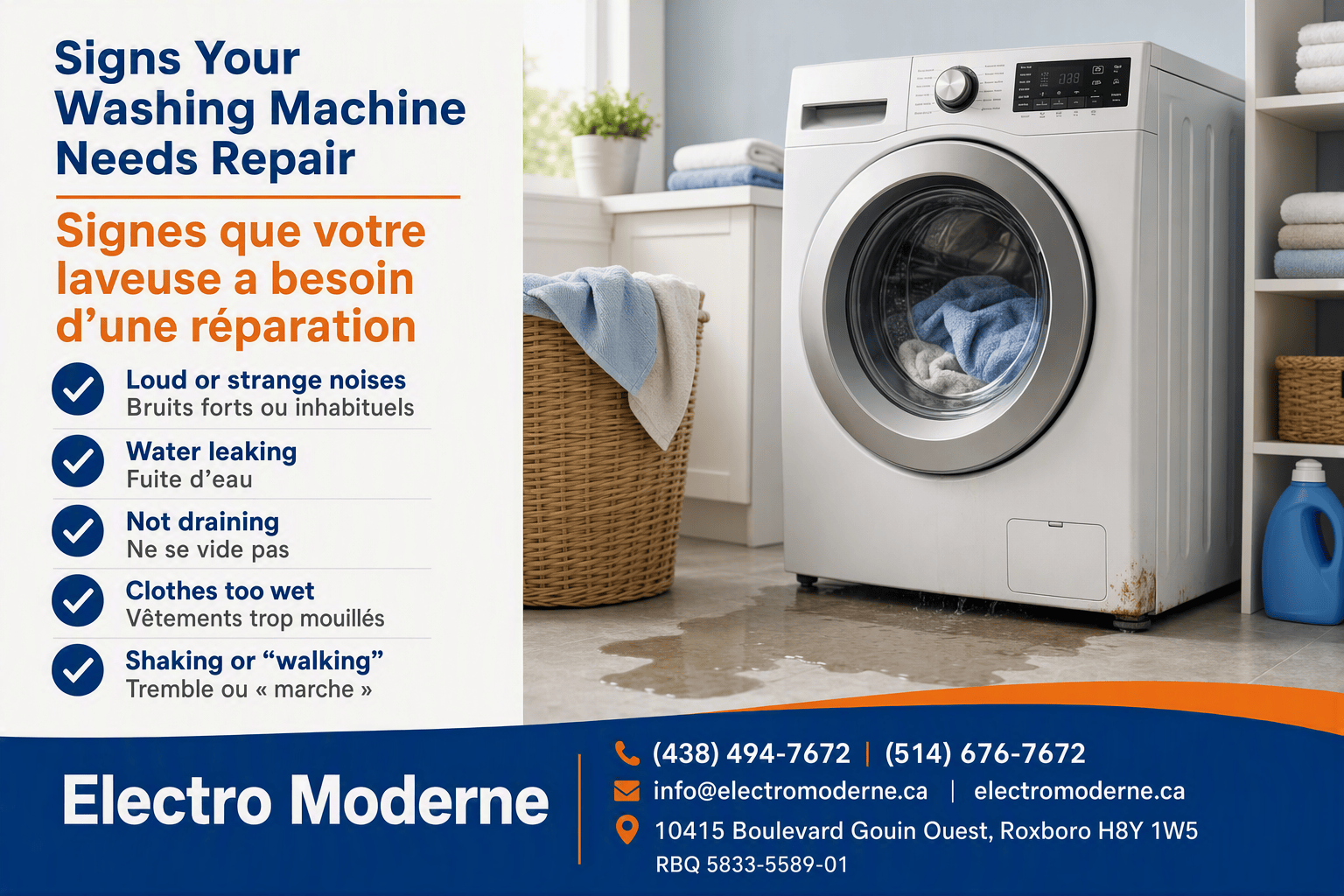
A washing machine will naturally make some noise while filling, washing, draining, and spinning. However, a new sound that is unusually loud, repetitive, or getting worse should not be ignored.
Banging or heavy thumping can sometimes happen because clothes have collected on one side of the drum. If redistributing the load solves the problem, there may not be a mechanical fault.
But if the washer repeatedly bangs even with balanced loads, there could be an issue with the suspension or other drum-support components. Grinding or rumbling noises can also indicate mechanical wear. Watch for:
• Loud banging during the spin cycle
• Grinding or rumbling sounds
• Repeated squealing or squeaking
• Rattling that wasn't there before
• Noise that becomes louder as the spin speed increases
• The washer making unusual sounds even when empty
Try this first: Stop the cycle and make sure the washer is level and the load is evenly distributed. If the noise continues, professional diagnosis is a good next step.
2. Water Is Leaking From the Washing Machine
A small puddle may seem harmless, but a leaking washing machine should never become part of your normal laundry routine.
The location of the water can provide a clue. Water around the front of a front-load washer may involve the door gasket or door area. Water behind the appliance may come from a supply or drain hose, while water underneath can have several possible causes, including the drain system or pump area. Check for:
• Water underneath the washer
• Water around the door
• Drips from the rear hoses
• Water appearing during the drain cycle
• A damaged or dirty door gasket
• Repeated small puddles after washing
Important: Don't assume the location of the puddle is the exact location of the problem. Water can travel underneath the appliance before reaching the floor.
If the leak is significant or water is reaching electrical connections, stop using the appliance and arrange for professional service.
3. Your Washer Isn't Draining Properly
One of the clearest signs of a washing machine problem is water remaining inside the drum after the cycle should be finished.
Drainage problems can have several causes. A blocked filter, restricted hose, drain pump problem, or control issue can prevent the washer from completing the drain stage.
You may notice:
• Water sitting in the drum after a cycle
• The washer taking much longer to drain
• Clothes remaining submerged
• A humming sound during the drain stage
• A drain-related error code
• The washer stopping before the cycle finishes
If your model has a user-accessible drain filter, consult the owner's manual before cleaning it. Different machines have different procedures, and some can release a significant amount of water.
If the problem returns after basic maintenance, it's time to have the washer diagnosed.
4. Your Clothes Come Out Soaking Wet
Your washer doesn't need to leave your clothes nearly dry, but they should not come out dripping wet after a completed spin cycle.
This can happen when the washer isn't draining properly, isn't reaching the correct spin speed, or is stopping the spin cycle because it detects an imbalance. Mechanical or door/lid-related problems can also prevent normal spinning.
Before booking a repair, check:
• Is the load badly unbalanced?
• Is the washer overloaded?
• Is there water remaining in the drum?
• Does a spin-only cycle work normally?
• Is the washer displaying an error code?
• Does the problem happen with every load?
If properly balanced loads consistently finish soaking wet, don't simply keep running additional spin cycles. The underlying problem should be identified.
5. Your Washing Machine Shakes, Vibrates, or “Walks”
A little movement during a high-speed spin can be normal. A washer that violently shakes, moves across the floor, or repeatedly hits nearby cabinets is different.
The first thing to check is whether the machine is level and whether the load is distributed properly. If those basics are fine and the washer still shakes excessively, worn suspension components or other mechanical problems may be involved.
Look for:
• The washer moving forward during spin
• Strong vibration through the floor
• The drum appearing unusually unstable
• Repeated banging against walls or cabinets
• Vibration that occurs even with balanced loads
This is especially worth addressing in a small laundry room, condo, or stacked washer- dryer setup where excessive movement can affect surrounding cabinets and surfaces.
6. Your Washing Machine Won't Start
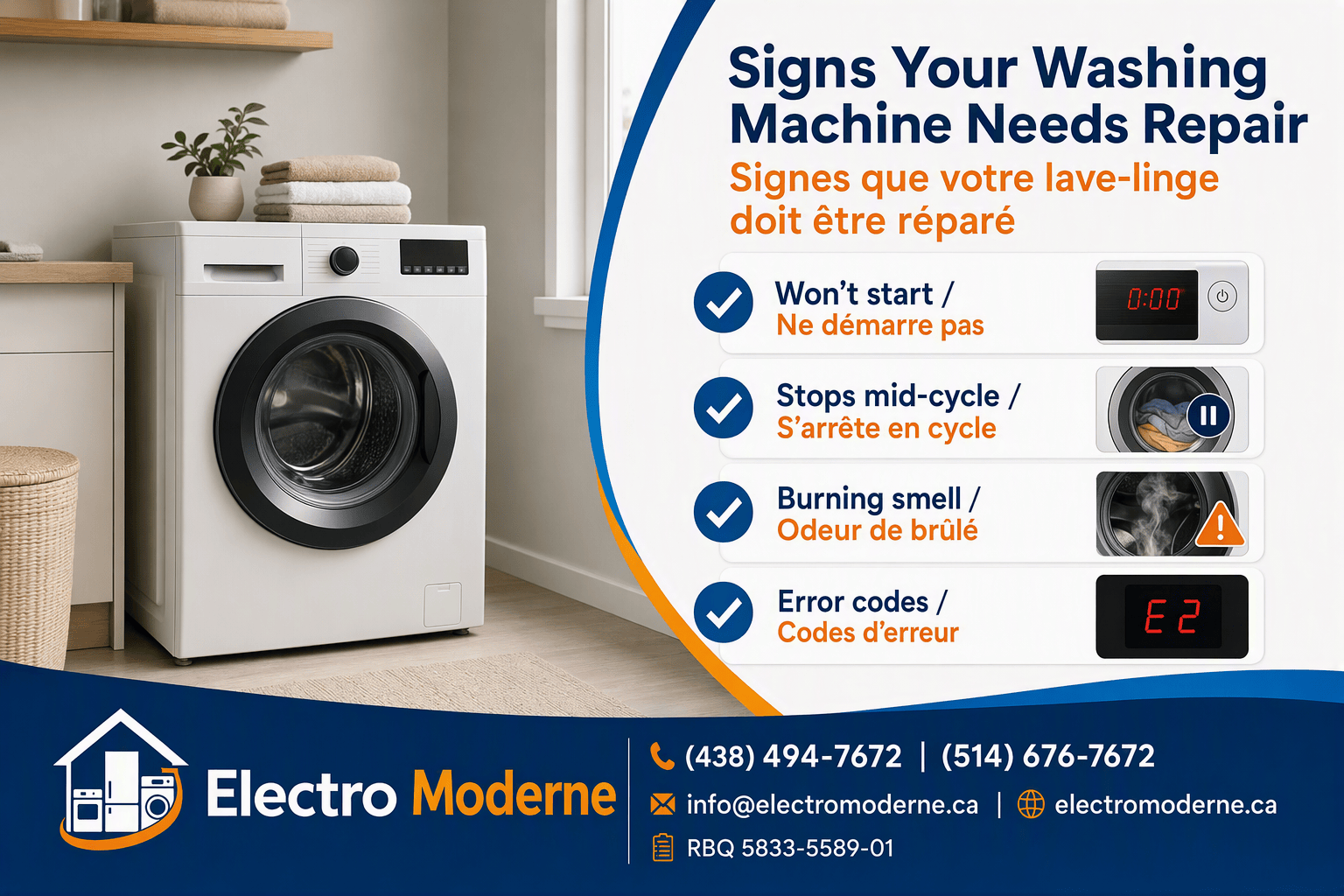
Pressing the Start button and getting nothing can be frustrating, but the cause isn't always a major component failure.
Before assuming the worst, check the basics. Your washer may not start if it isn't receiving power, the door or lid isn't properly closed, or a safety switch isn't detecting that the door is secure. Water-supply issues can also prevent some cycles from beginning. Manufacturer troubleshooting information recommends checking basic power, door, controls, and water-supply conditions before requesting service.
Check:
• Is the washer receiving power?
• Has the circuit breaker tripped?
• Is the door or lid fully closed?
• Is a delay-start setting active?
• Are the water supply valves open?
• Is an error code displayed?
• Does the control panel respond normally?
If you've checked the basic conditions and the washer still refuses to start, professional diagnosis can help identify whether the issue is electrical, mechanical, or related to the control system.
7. Your Washer Stops in the Middle of a Cycle
A washer that repeatedly stops halfway through a cycle is giving you an important warning.
The meaning depends on when it stops. A washer that fills but doesn't continue may have a different problem from one that washes normally but stops when it should drain or spin. Drainage, door-lock, sensor, motor, and control problems can all produce similar symptoms.
Pay attention to:
• The exact stage where the washer stops
• Whether water remains inside
• Whether the door stays locked
• Whether an error code appears
• Whether restarting temporarily fixes the problem
• Whether the same problem happens on different cycles
Write down the error code if one appears. Your owner's manual may explain what it means, but remember that an error code often identifies a system or condition, not necessarily the exact part that has failed.
8. Your Washing Machine Has a Burning Smell or Electrical Odour
A burning smell is a warning sign you should take seriously. A hot rubber or electrical smell can indicate overheating or a problem with a component, wiring, motor, belt, or another part of the appliance.
You should not keep running a machine simply to see whether the smell disappears. If you notice:
• A burning smell
• Smoke
• Sparks
• A hot electrical smell
• Repeated circuit-breaker trips
• A power cord or outlet that appears damaged
Stop using the washer and disconnect it from power if you can do so safely. Don't open electrical components or attempt an internal repair yourself. Have the appliance inspected by a qualified professional. Safety should always come before getting one more load of laundry finished.
9. Your Washer Keeps Showing Error Codes
Modern washing machines use sensors and electronic controls to monitor different parts of the wash cycle. An error code can appear when the machine detects a problem with drainage, water supply, door locking, balance, temperature, motor operation, or another system.
An error code is useful information, but it doesn't always tell you exactly which part needs to be replaced. Different problems can sometimes produce related symptoms, which is why proper diagnosis matters.
When an error code appears:
• Take a photo of the display.
• Write down the exact code.
• Check your owner's manual.
• Note what the washer was doing when the code appeared.
• Try only the basic troubleshooting recommended for your model.
• If the code keeps returning, arrange for professional diagnosis.
Avoid repeatedly resetting the machine and hoping the problem disappears. A temporary reset may clear a one-time electronic glitch, but a recurring error deserves attention.
When Should You Repair or Replace Your Washing Machine?
Seeing one of these signs doesn't automatically mean your washing machine needs to be replaced.
A washer that has stopped draining might need a relatively straightforward repair. On the other hand, a major mechanical problem on an older appliance may make replacement a more sensible financial decision.
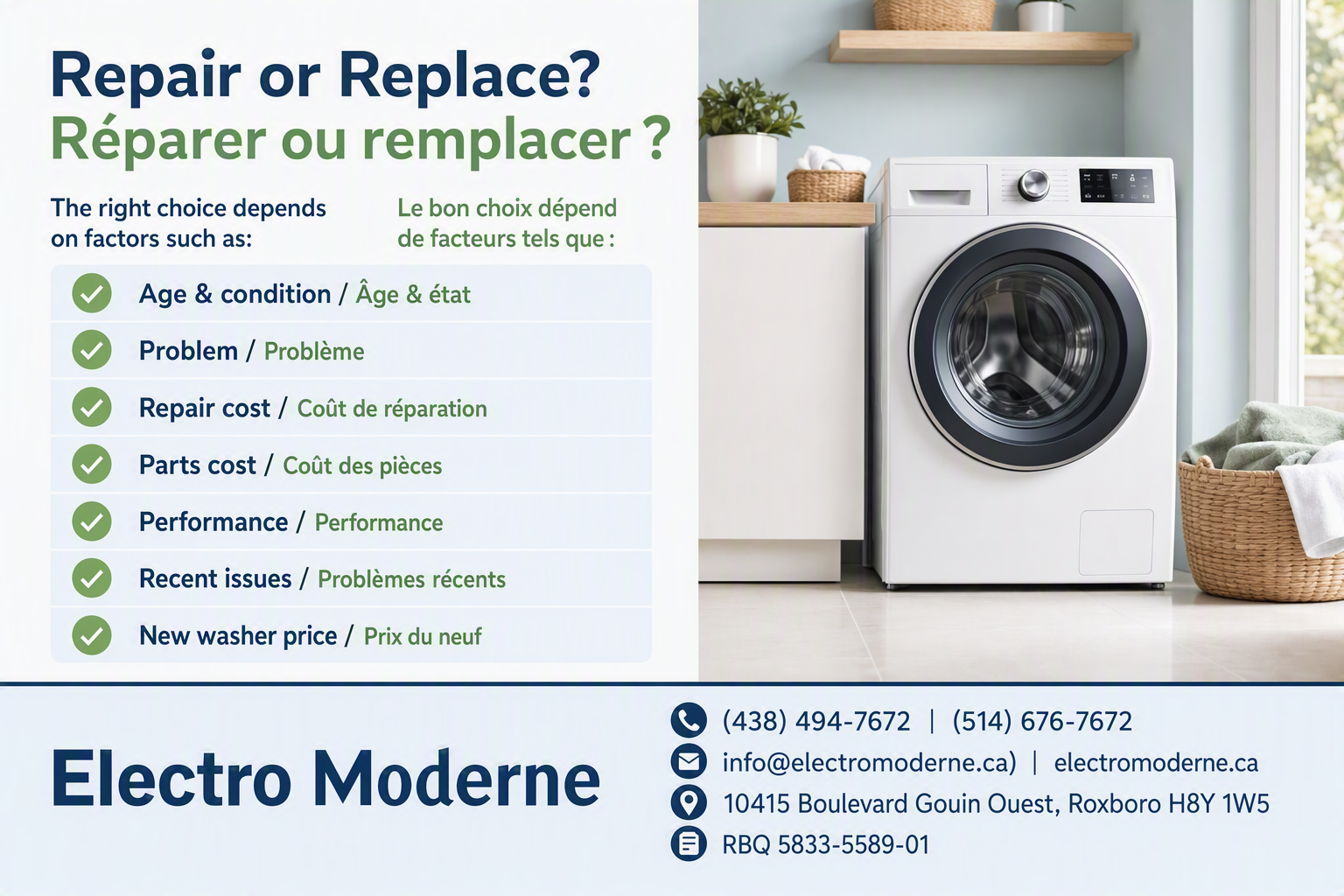
The right choice depends on factors such as:
• The age and condition of the washer
• The exact problem
• The cost of the repair
• The availability and cost of replacement parts
• The washer's overall performance
• Whether other problems have appeared recently
• The price of a comparable new appliance
That's why diagnosis should come before making a major purchase decision. If your washer is still in good condition overall, repairing one failing component may extend its useful life. If the machine has several significant problems, comparing the repair cost with the cost of another appliance can help you make a more informed choice.
Need Washing Machine Repair in Montreal?
Let Electro Moderne help you get your washer back to doing what it should.
Call Electro Moderne today at (438) 494-7672 - (514) 676-7672 and let our experienced team help get your washer back to work. Our experienced team can diagnose your appliance, explain the problem, and help you determine whether repair is the right choice.
Have a washing machine problem? Contact Electro Moderne today and let our team take care of it.
Visit: electromoderne.ca
Your washer deserves the right repair. Choose a team you can trust.